Keynote Speakers
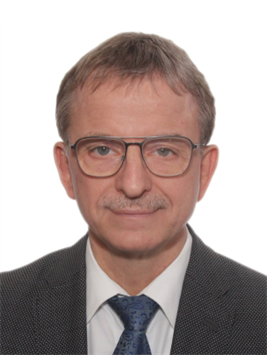
Steffen Leonhardt, RWTH Aachen University
Biography
Steffen Leonhardt (SM’06) received the M.S. degree from SUNY at Buffalo, NY, USA, the Dipl.-Ing. and the Ph.D. degree in control engineering from TU Darmstadt, Germany, and the M.D. degree from Goethe University Frankfurt, Germany. After almost 5 years of duty as a Research and Development Manager for Dräger Medical AG&Co KGaA, Lübeck, Germany, he was recruited as a Full Professor in Biomedical Engineering at RWTH Aachen University in 2003, where he has been the Philips Endowed Chair of Medical Information Technology til 2017. His research interests include closed-loop control and automation in medicine, bioimpedance, unobtrusive sensing, biomedical signal processing and machine learning.
Steffen Leonhardt is a Fellow (2014) of the North Rhine-Westphalian Academy of Sciences, Humanities and the Arts, Düsseldorf, Germany and a Fellow (2023) of the German “National Academy of Science and Engineering” (acatech), Berlin/Munich. From 2015 to 2018, he served as the President for the International Society for Bioelectromagnetism, from 2015 to 2016 he was appointed an IEEE EMBS Distinguished Lecturer. In 2018, he received the Doctor Honoris Causa from the Czech Technical University in Prague, Czech Republic. Furthermore, in that year he has been appointed Distinguished Professor at IIT Madras, Chennai, India. His publication record can be found at https://scholar.google.de/citations?hl=de&user=GZo4IYgAAAAJ. Among other duties, he serves as an associate editor for the IEEE Journal of Biomedical and Health Informatics and the journal Biomedical Engineering / Biomedizinische Technik. He is on the editorial board of the Journal of Clinical Monitoring and Computing and has been an associate editor for the IEEE Transactions on Biomedical Circuits and Systems from 2011 to 2020. Since 2024, he serves on the review board 4.41 “Systems Engineering” of the German Research Foundation (DFG).
“Unobtrusive Sensing of Vital Signs“
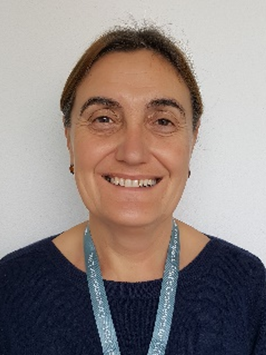
Flavia Ravelli, University of Trento
Biography
Flavia Ravelli is an Associate Professor of Physiology at the University of Trento, where she is affiliated with the Department of Cellular, Computational and Integrative Biology (CIBIO). She currently heads the Laboratory of Biophysics and Translational Cardiology. Her research efforts are primarily focused on cardiac electrophysiology, with a specific emphasis on investigating the underlying mechanisms of cardiac arrhythmias. Her expertise covers a broad spectrum of translational cardiology, including biomarker identification, cardiac electrophysiology modeling, signal and image processing tailored for arrhythmia analysis, and innovations in cardiac ablation methodologies. She has made significant contributions to the field, evidenced by over 100 international scientific publications in peer-reviewed journals. She actively coordinates numerous international research projects dedicated to the mechanisms and treatment of cardiac arrhythmias.
“Bridging the Gaps: Connecting Tissue Structure, Integrated Imaging, and Computer Simulation for Arrhythmia Insight“
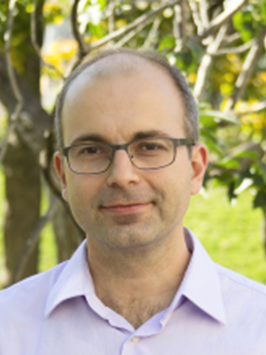
Georgios D.Mitsis, McGill University
Biography
Dr. Georgios Mitsis is an Associate Professor and William Dawson Scholar, as well as the Director of the Biosignals and Systems Analysis Lab (http://biosigsyst.lab.mcgill.ca/), at the Department of Bioengineering, McGill University, Montreal, Canada. He has a background in Electrical and Computer Engineering (Diploma – National Technical University of Athens and M.Sc. – University of Southern California), as well as Biomedical Engineering (M.Sc. and Ph.D. – University of Southern California). He has held postdoctoral research positions at the Biomedical Simulations Resource (University of Southern California) and the Centre for Functional Magnetic Resonance Imaging of the Brain (fMRIB Centre – University of Oxford). His research interests include nonlinear and nonstationary systems modeling, systems physiology and multimodal functional neuroimaging (fMRI, EEG and simultaneous EEG-fMRI). In this context, he is particularly interested in the neural and physiological sources of the BOLD fMRI signal, as well as the function of autonomic centers in the brain in health and disease. He is a Senior Member of the IEEE, and is currently serving as Vice-President Publications of the IEEE Annual IEEE Engineering in Medicine and Biology Society (EMBS). He also served as the Editor-in-Chief for the Annual IEEE EMBS Conference between 2023 and 2025. He has edited one book and authored/co-authored more than 85 journal papers, 5 book chapters, as well as more than 130 conference papers and abstracts. (>4900 citations; h-index: 32).
“Mathematical modelling of cerebral hemodynamics and brain-heart interactions using multimodal functional neuroimaging”
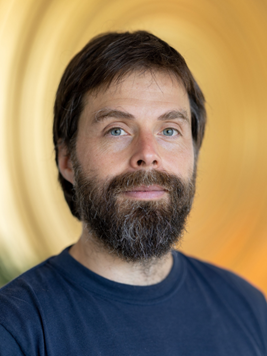
Fernando E. Rosas, University of Sussex
Biography
Fernando Rosas received the B.A. degree in music composition and philosophy (Minor), the B.Sc. degree in mathematics, and the M.S. and Ph.D. degree in engineering sciences from the Pontificia Universidad Católica de Chile. After that, he worked as postdoctoral researcher at KU Leuven, National Taiwan University, and Imperial College London. He currently works as Assistant Professor at the University of Sussex and Research Fellow at Imperial College London and the University of Oxford. His work focuses on collective behaviour and emergent phenomena in biological and artificial systems using methods spaning computational neuroscience, physics, computer science, and cognitive science.
“High-order interdependencies in physiological systems: what are they and why they matter“
Young Invited Speakers
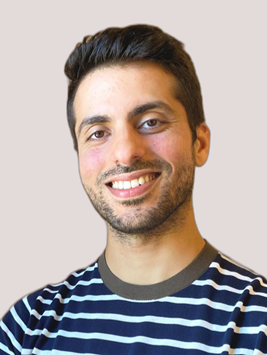
Whabi El-Bouri, University of Liverpool
Biography
Dr Wahbi El-Bouri works at the cutting-edge of Digital Twin development as a Senior Lecturer (Associate Professor) at University of Liverpool. He heads up his research team, the Virtual Vascular Human research group, where he develops Digital Twin technology of cerebrovascular and retinal vascular systems.
An engineer by training, he received both his MEng and DPhil in biomedical engineering from University of Oxford before transitioning to Department of Cardiovascular Medicine in Liverpool to begin the process of translating these Digital Twins to clinical environments. Digital Twins that have been developed include simulations of cerebrovascular ageing, stroke and its treatment, simulations of ageing retinas, and the dynamics of the heart.
Combining our understanding of the physics and mathematics that describe the human body with patient data, Wahbi seeks to develop advanced Digital Twins that can be used for risk prediction as well as product testing to speed-up and de-risk drug and medical device development. Furthermore, he is expanding his work to understand how digital twins can be used for preventative health. As engineers working in a medical environment, his team work within a fast-paced environment with end-users at the forefront.
He has been funded by the European Union, the Royal Society, and UK research councils to continue to develop these healthcare Digital Twins. He also works as an advisor to two med-tech startups.
“Cerebrovascular Ageing Models – Towards Digital Twins“
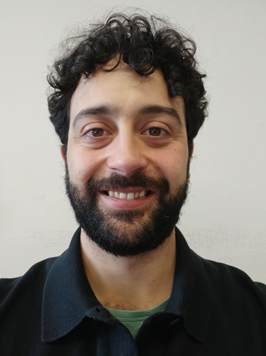
Vincenzo Catrambone, University of Pisa
Biography
Vincenzo Catrambone, Ph.D., is an Assistant Professor at the Neuro-Cardiovascular Intelligence Lab of the Bioengineering and Robotics Research Centre “E. Piaggio” and Information Engineering Department of University of Pisa. His research work spans statistical and nonlinear biomedical signal processing, cardiovascular and neural system modelling, physiologically interpretable artificial intelligence systems. Applications of his research include the assessment of brain-heart interactions in physiological and pathological conditions, brain-computer interfaces, interpersonal synchrony estimation, affective computing, assessment of mood and mental/neurological disorders, and neurorehabilitation. He received the bachelor’s and master’s degree in biomedical engineering from University of Pisa, Italy, in 2013 and 2016, respectively. In 2020, he received the Ph.D. in Information Engineering cum laude, and his Ph.D. thesis was specifically focused on the estimation of functional brain-heart interplay. He authored more than 80 scientific manuscripts (of which >40 in international scientific journals), and 1 book, and attended as speaker at more than 10 international conferences. He is involved in several international research projects, and in the past few years, he has been visiting researcher at the École Normale Supérieure de Lyon, France, and at the Brain Imaging Centre of the Maastricht University, Netherlands.
“A Meta-Methodology Toward a Standardization of Functional Brain–Heart Interplay Assessment“
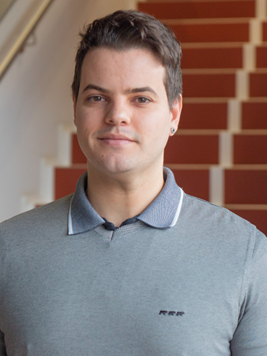
Raphael Martins de Abreu, LUNEX University
Biography
Dr. Raphael Martins de Abreu holds a PhD in Physiotherapy and is a Senior Lecturer at LUNEX University of Applied Sciences (Luxembourg). His academic and research work focuses on cardiovascular autonomic regulation, cardiometabolic risk, and cardiorespiratory assessment in clinical and special populations. He has a particular interest in cardiorespiratory coupling as a non-invasive marker of cardiovascular function, as well as in exercise prescription and the translation of physiological evidence into clinical and rehabilitative practice.